Sticky Traps only Captures Adult Insects.
To permanently eradicate fungus gnats and thrips, you must eliminate the breeding vector: decaying, non-sterile organic matter in your potting soil.
Most indoor gardeners view pests as an inevitability—a tax you pay for having nature inside your home.
This is false. Pests are not “spontaneous generation.” They are introduced vectors. In 90% of cases, the infestation enters your home inside a sealed bag of potting soil from a big-box store.
The standard industry practice for mass-market soil involves composted forest products and manure. These materials are often stored outdoors, where they become a breeding ground for Fungus Gnats (Bradysia) and Thrips. When you open that bag, you are releasing a dormant colony into your living room.
At Landiris, we utilize a Sterile Input Strategy. By controlling the substrate, you break the lifecycle of the pest before it begins.
01 // The Larval Threat
The flying gnat you see is annoying, but it is harmless. The larva living in your soil is the predator.
Fungus gnat larvae feed on fungi and organic matter. However, when the soil dries out or the colony gets too large, they switch their diet to Root Hairs. They strip the fine feeder roots of your plant, preventing water uptake.
- The Symptom: Yellowing leaves and drooping stems.
- The Misdiagnosis: Most people assume “Underwatering” or “Root Rot.”
- The Reality: The roots are being eaten alive from the inside out.
02 // The “Food Source” Factor
Pests require two things to reproduce: Moisture and Decaying Organic Matter.
Peat Moss and Compost are essentially “rotting food.” They provide the perfect buffet for larvae. As peat degrades, it becomes acidic and dense, creating the sludge that larvae thrive in.
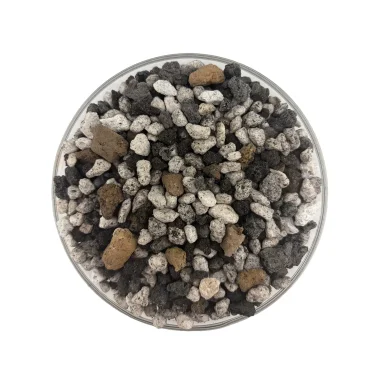
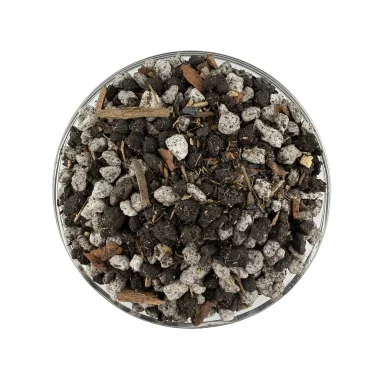
The Sterile Solution: We replace compost and peat with Coco Coir and Pumice.
- Coco Coir: A sterile, inert fiber that resists decay. It holds water but offers zero nutritional value to pests.
- Pumice: Volcanic rock that creates airflow.
If the substrate contains no rotting food (compost), the larvae starve. The cycle is broken mechanically, without using pesticides.
03 // The “Dry Zone” Barrier
Fungus gnats lay their eggs in the top 1 inch of soil. This layer must remain moist for the eggs to hatch.
To create an impenetrable barrier, you must engineer a “Dry Zone” at the surface.
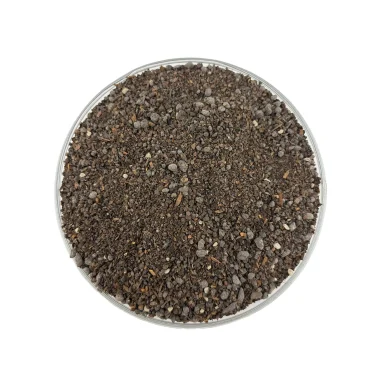
- The Protocol: Top-dress your soil with 0.5 inches of Sand, Fine Pumice, or Gravel.
- The Mechanism: This inorganic layer drains instantly and stays bone-dry.
- The Result: The adult gnat cannot detect the moisture below and cannot lay eggs. The lifecycle ends.
04 // The Verdict
You cannot win a war against pests using sticky traps. That is like trying to empty a flooding boat with a spoon while leaving the hole in the hull open.
You must close the hole.
- Stop buying compost-heavy soils.
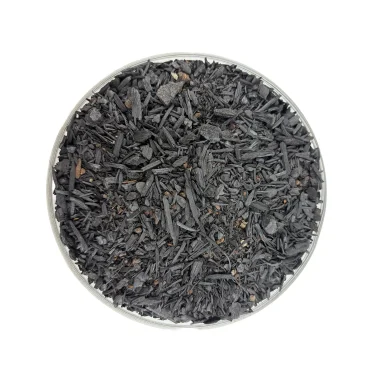
- Switch to sterile, inert substrates (Coir, Bark, Pumice).
- Allow the top 2 inches of soil to dry between waterings.
If you control the soil, you control the pest.