Rethinking the “Drainage Hole”
Many gardeners think a drainage hole is the ultimate protection against overwatering. In reality, a hole only lets water escape—it doesn’t stop the oxygen-starved zone that forms in dense, peat-heavy soils. True plant health comes from how well oxygen moves into the soil, not just how water leaves.
01 // Substrate Porosity: How Roots “Breathe”
Roots aren’t meant to live underwater—they need constant oxygen to absorb nutrients effectively. Think of healthy soil as a “breathing engine” for your roots.
Key Soil Features:
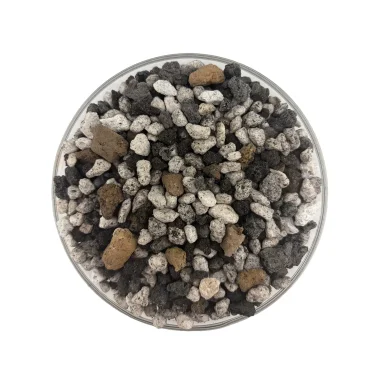
- Macro-pores: Large air spaces created by minerals like pumice or lava.
- Micro-pores: Tiny pockets that hold water but still leave room for air.
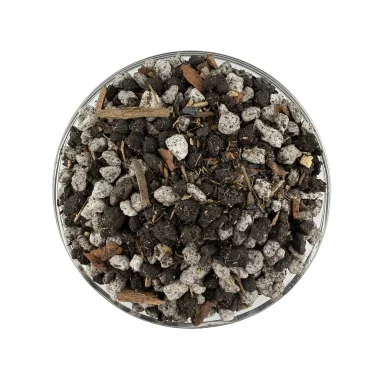
- Non-collapsing matrix: Unlike peat or coir that compress over time, mineral-rich soils keep their structure, preventing roots from suffocating.
Gas Exchange in Action:
As water moves through the soil, it pushes out old CO₂ and pulls in fresh oxygen. Without proper pores, oxygen flow stops, and roots slowly starve.
02 // Capillary Wicking vs. Gravity
Many “overwatered” plants actually suffer from a Hydraulic Deficit—water isn’t reaching the roots where it’s needed.
The Problem:
In peat-heavy soils, water often runs straight down the sides of the pot, leaving the core dry. This is called hydrophobic soil.
The Solution:
Mineral substrates like LANDIRIS use capillary wicking to move water sideways.
- Mineral physics: High-surface-area particles pull water laterally.
- Uniform moisture: Every root has access to water.
- Balanced hydration: Roots stay moist but never sit in stagnant water.
03 // The Timeline of Root Rot
“Root rot” happens when roots stop getting oxygen. Understanding this timeline is critical:
- Days 1–7: Stagnation – Air gaps fill with water; oxygen levels drop.
- Days 7–14: Oxygen Depletion – Beneficial microbes die; roots can’t absorb nutrients, leading to yellowing.
- Day 14+: Pathogen Invasion – Anaerobic bacteria and fungi attack; roots turn mushy and black.
04 // Recovery: The LANDIRIS Method
If root rot starts, you need surgical action:
- Extraction & Pruning: Remove the plant, cut away all mushy roots.
- 3% Hydrogen Peroxide Rinse:
- Sterilizes harmful microbes.
- Gives roots a burst of oxygen.
- Re-pot in Mineral Substrate:
- High porosity prevents oxygen-starved zones.
- Macro-pores keep air flowing even if you overwater.
05 // Environment Matters
Healthy soil alone isn’t enough—you must manage:
- Light: More light = faster water movement through the plant.
- Humidity: In high-humidity areas, soil must be more porous.
- Pot Material: Terracotta pulls moisture out naturally; plastic pots require more mineral structure to prevent waterlogging.
06 // Nutrient Availability: Cation Exchange Capacity (CEC)
CEC is the soil’s “battery” for nutrients. It holds positively charged ions like Calcium, Magnesium, and Potassium and releases them when the plant needs them.
Why It Matters:
- Low CEC = nutrients wash out.
- High CEC without balance = nutrients get locked up.
- LANDIRIS soils maintain stable CEC for steady nutrient supply without salt buildup.
07 // Nutrient Delivery: Making Nutrients Reach Roots
Even with good CEC, nutrients won’t move if the water isn’t reaching roots. Nutrients travel in three ways:
- Mass flow: Water pulled up through transpiration carries nutrients.
- Diffusion: Nutrients move from high to low concentration in a thin water film.
- Root interception: Roots physically contact nutrient-rich surfaces.
Tip: A non-collapsing mineral matrix ensures roots explore every part of the soil.
08 // BioCharge™: Beyond N-P-K
Healthy soil isn’t just about nitrogen, phosphorus, and potassium.
- Micronutrients: Iron, manganese, boron—often missing in standard soils.
- Microbial support: Organic amendments boost beneficial microbes.
- Structural resistance: Strong, well-fed plants resist pests and disease.
09 // Silica: Strength From Within
Silica strengthens plants:
- Builds tougher cell walls → protects against pests.
- Prevents floppy growth in low light.
- Reduces water loss → helps with heat and drought tolerance.
10 // Temperature: The Final Factor
Soil temperature affects how fast roots take up nutrients.
- Cold soil (<55°F): slows metabolism, even if soil is wet.
- Hot soil: less oxygen in water → stagnation risk.
- Minerals: retain heat, buffer swings, and protect roots from stress.
Hydraulic Validation Test // Internal Console
Use this tool to verify if your current substrate meets the LANDIRIS™ Standard for gas exchange and drainage velocity.
Substrate Velocity Calculator
Dynamic calibration of drainage speed against species-specific metabolic demand.